










Minister of Tourism Patricia de Lille said Gauteng has pulled in an estimated R1 billion in revenue from visitors attending the G20 events in the province over the weekend.
This is an early estimation of tourism revenue made by Gauteng during South Africa’s G20 presidency. More than 130 meetings were hosted across the country, with the majority of talks on the bloc’s policy priorities held in Gauteng.
The G20 adopted a declaration, agreeing to address climate-related issues, strengthening disaster resilience and responses, ensuring debt sustainability for low-income countries.
De Lille spoke to EWN on the sidelines of the final day of the G20 Leaders’ Summit at the Nasrec Expo Centre, in the south of Johannesburg, on Sunday.
“We are busy with the audits because you want to get an accurate reflection. Now from January, we have shown the visitors and the delegates what else they can do while they are in our country. We have sold packages, so some people are staying now after the G20. Some of them have come earlier but in the next week or so we’ll be able to crunch the numbers.”

De Lille said arrivals from the United States (US) have now surpassed inbound tourists from the United Kingdom (UK).
“I suppose people want to come and see for themselves, is it true? But also, tourism is not affected by the tariff debate and the geopolitics tension, and the American visitors are getting value for money when they come here.”
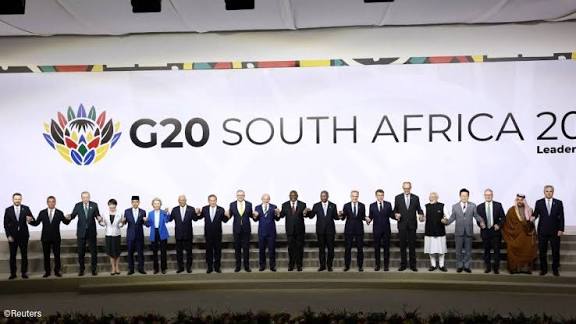
The highly anticipated gathering of the heads of state from the G20 bloc and other high-level delegates convened on Saturday and Sunday.
The close of the summit on Sunday officially ended South Africa’s G20 Presidency.
Only the United States (US), the incoming hosts, did not attend the final talks at Nasrec Expo Centre, in the South of Joburg.
While there was some skepticism that South Africa would find sufficient consensus, a 30-page leaders’ declaration was finalised on the first day of the gathering.
Speaking on the sidelines of the gathering on Sunday, the Minister of International Relations, Ronald Lamola, hailed the global endorsement as a renewed commitment to multilateral cooperation.
“The global south is providing leadership that has never been seen before. That these institutions that have been created after the second world war have served us well. We need to maintain them. But obviously there is a need for reform of some of them like the United Nations Security Council and other platforms. There is a need for reform to ensure that there’s representativity of the global south.”